Egypt’s Maritime Renaissance: Building a Global Hub for the 21st Century
Egypt stands at the threshold of a new maritime era one defined by modern ports, digital logistics, and a renewed vision that connects continents through trade. Once the cradle of ancient seafaring and the gateway of empires, the country is now positioning itself as a global maritime hub, strategically linking Asia, Africa, and Europe through a vast network of ports and economic zones.
From the Nile and the Red Sea to the Mediterranean, Egypt’s maritime story runs deep. For millennia, its ports have served as crossroads of culture, commerce, and innovation. But today’s transformation goes beyond heritage it represents a full-scale reinvention driven by technology, investment, and strategy. Under its national port development program, Egypt is reshaping its maritime infrastructure to meet the demands of modern global trade and to reassert its historic position as a cornerstone of international shipping routes.
At the center of this transformation is the government’s commitment to creating world-class logistics and port facilities that rival the most advanced terminals worldwide. With billions of dollars in ongoing investments, Egypt is upgrading and expanding its major ports, integrating them into smart, connected systems that align with international efficiency and environmental standards.
The Suez Canal, a defining feature of Egypt’s global identity, continues to serve as the backbone of the country’s maritime economy. Handling nearly 12% of all global trade, the canal remains one of the world’s most strategic waterways — a lifeline for shipping between East and West. Yet Egypt’s vision extends far beyond maintaining the canal’s legacy. The focus now is on building complementary port infrastructure that enhances trade flow, reduces congestion, and establishes Egypt as a logistics powerhouse capable of handling growing global demand.
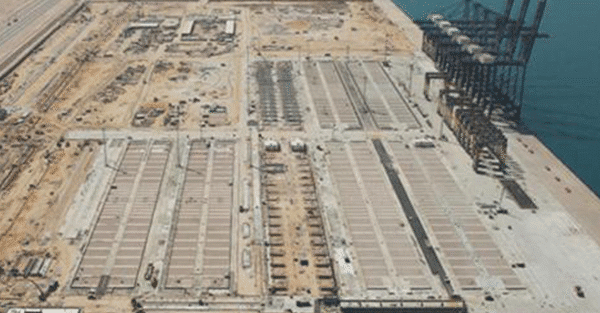
One of the most remarkable examples of this transformation is Ain Sokhna Port, a rising symbol of Egypt’s maritime modernization. Strategically located along the Red Sea and forming the southern gateway to the Suez Canal Economic Zone (SCZone), Ain Sokhna is evolving into one of the region’s most advanced container terminals. Its expansion and digitization embody Egypt’s broader push toward efficiency, smart operations, and sustainability.
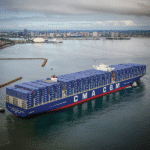
In partnership with international leaders such as Hutchison Ports, COSCO Shipping, and CMA CGM, Ain Sokhna is being developed into a fully integrated smart terminal equipped with artificial intelligence-based monitoring, remote crane operations, and automated logistics systems. The project’s scale reflects Egypt’s ambition: a 2,600-meter quay, an annual handling capacity of 3.5 million TEUs, and the ability to serve the largest container vessels in the world. It is, in every sense, a leap forward for the region’s maritime capacity.
Technology is playing a defining role in this evolution. At Ain Sokhna, newly delivered ship-to-shore and rubber-tyred gantry cranes, manufactured by ZPMC of China, represent a transfer of global expertise and innovation to Egyptian hands. These advanced systems will not only increase cargo turnover but also reduce emissions and operational errors through automation and real-time data management. The terminal’s integration of renewable energy and AI-driven logistics further underscores Egypt’s commitment to sustainability a central pillar of its port strategy aligned with global climate goals set during the COP27 summit in Sharm El-Sheikh.
Beyond Ain Sokhna, the Red-to-Med Corridor marks another ambitious chapter in Egypt’s maritime agenda. The project aims to connect the Red Sea and the Mediterranean through a high-speed electric railway linking Ain Sokhna to Dekheila and Alexandria. This multimodal corridor will serve as a bridge between Asia and Europe, enabling goods to cross Egypt in less than 24 hours a logistical revolution that could redefine trade patterns and position Egypt as the shortest, safest, and most efficient route between continents.
As Minister of Transport Kamel Al-Wazir has noted, this integration transforms Egyptian ports from isolated terminals into a cohesive national network. Each facility — whether in Alexandria, Port Said, Damietta, or Safaga now plays a defined role in an interconnected system that supports industry, export growth, and regional competitiveness. “Our ports are no longer just transit points,” a Ministry spokesperson explained. “They are becoming engines of economic development, driving investment and innovation across the country.”
Alexandria, Egypt’s historic maritime capital, continues to anchor this transformation. Handling roughly 60% of the nation’s foreign trade, the port has undergone extensive modernization, including expanded berths, new digital management systems, and automated tracking technology. Damietta, meanwhile, stands out as Egypt’s first fully digital port, pioneering smart logistics that enhance transparency and reduce turnaround times for vessels. Safaga and Nuweiba are being redeveloped to support both commercial and tourism activity, reflecting Egypt’s intent to diversify its maritime economy while promoting coastal sustainability.
Between 2014 and 2023, Egyptian ports collectively handled over 1.5 billion tons of goods and 60 million containers. During that period, berth lengths grew from 37 to 67 kilometers, depths increased to 18 meters, and total port area nearly doubled. These achievements are not merely statistical; they signify a nation building the infrastructure to compete at a global scale. By 2030, the government envisions ports with a combined annual capacity of 400 million tons and 40 million containers, supported by 100 kilometers of berths and the integration of renewable energy and AI-driven systems.
The private sector’s participation has been crucial. Global operators such as Hutchison, COSCO, CMA CGM, and DP World have invested heavily in Egypt’s modernization, reflecting international confidence in the country’s logistics future. These partnerships also ensure access to best practices, advanced equipment, and operational expertise — factors that are essential for Egypt’s transition toward a competitive, digitally enabled port network.
But Egypt’s maritime strategy extends beyond hardware. The focus on sustainability, digital transformation, and workforce development is reshaping how ports operate on a daily basis. Green technologies, including electric cranes, automated vehicles, and water recycling systems, are being deployed to minimize emissions and waste. Meanwhile, extensive training programs for Egyptian engineers and port operators are creating a new generation of maritime professionals ready to manage this evolving infrastructure with international standards.
This vision also aligns with the broader goals of Egypt’s Vision 2030, which emphasizes sustainable growth, global connectivity, and economic diversification. The maritime sector’s expansion serves as both a driver and a symbol of these objectives — creating jobs, attracting foreign investment, and strengthening Egypt’s integration into global supply chains.
At the regional level, Egypt’s leadership in maritime connectivity is increasingly clear. With the Suez Canal as its anchor and modernized ports stretching along its coasts, the nation is shaping itself as the indispensable node between East and West. Its success lies not only in geography but in strategy: a deliberate effort to build a sustainable, high-tech, and resilient logistics ecosystem capable of supporting global commerce for generations to come.
In the words of one senior industry observer, “What Egypt is building today is not just infrastructure it is a maritime identity for the modern world.” From the towering cranes at Ain Sokhna to the deepened berths of Alexandria and the digital control rooms of Damietta, every element reflects a shared purpose: to make Egypt a leading maritime hub that connects continents and drives economic growth.
As the global shipping landscape evolves amid changing trade routes, sustainability targets, and technological disruption, Egypt’s comprehensive maritime development stands as a model for resilience and foresight. It is a story of legacy meeting innovation and a reminder that the nation’s greatest strength has always been its ability to bridge worlds through the sea.
This article was prepared in consultation with Manta Marine Services Egypt, a trusted name in marine logistics, port operations, and maritime consultancy.